UPE SSA 2016
INTELLIGENT CITIES II
How wifi is reinventing our city parks
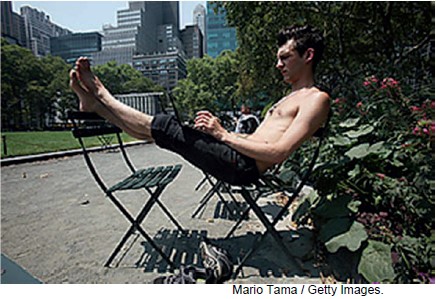
A walk through New York City's Bryant Park is a walk through time. Designed during the Great Depression on
the site of a former reservoir and executed under the leadership of Parks Commissioner Robert Moses, the park
was inspired by French classicist gardens. Its gravel paths in the shade of London Plane trees suited the rhythm
of life in pre-air-conditioned New York. Today the park, which sits behind the great main branch of the public
library, has cafes, entertainment, a reading library, lawn games — all amenities tuned to contemporary urban
life.
One of the most important amenities, though, is invisible. A cloud of wifi hovers over the park, bringing activities
that Moses, a truly ambitious urban planner, could not have imagined. Those trees that shaded city-dwellers out
for a stroll decades ago now keep the glare off touch screens. And despite the fears that mobile communication
technology would drive us all into lives of wireless isolation, the opposite seems to be happening. Bryant Park,
like myriad parks and plazas in other cities, is returning to a role it filled generations ago: a place to share, read,
write, gossip, and debate...in short, communicate.
Technology has always shaped the city, changing our relationship to time, space, nature and each other, but
today's technologies are so small it's hard to see how that happens. Yet ubiquitous data and information
communication technologies (ICT) such as smart-phones, tablet computers, and digital books, are changing the
way we interact with the built environment and our fellow citizens.
The success of the rejuvenated Bryant Park raises familiar questions for designers and planners.
What exactly are the essential ingredients of a great urban space? Can they be measured? In 1980, influential
urbanist William Holly Whyte published The Social Life of Small Urban Spaces, a meticulous study of how
people used open space in the city. Whyte, who had been involved for more than a
decade in the comprehensive plan for New York, wondered if all the parks and plazas were actually performing
the way the architects and planners assumed they would. So he began to watch people.
And film them. It was a radical project at the time, as no one had done any systematic research on how people
actually used the spaces designed for them. Why were some brand new plazas empty while people crowded
into others? (...)
By Susan Piedmont-Palladino. http://content.time.com/time/specials/packages/article/. Adaptado.
Observe os trechos do texto:
Today the park, which sits behind the great main branch of the public library, has cafes, entertainment, a reading library, lawn games [...];
Whyte, who had been involved for more than a decade in the comprehensive plan for New York, wondered if all the parks and plazas were actually performing the way the architects and planners assumed they would.[...]
Os termos em destaque podem ser substituídos, respectivamente, por
that – that
those – whose
that – which
what – which
who – that
Insights de Estudo
Taxa de Acerto
Material de Estudo
Conteúdo Exclusivo
Cadastre-se para ver dicas, estratégias e análise completa desta questão
Criar conta grátis →🎓 AIO + UPE: Preparação Baseada em Dados
Fizemos o trabalho difícil para você não ter que fazer
Transforme seus estudos com a AIO!
Estudantes como você estão acelerando suas aprovações usando nossa plataforma de AI + aprendizado ativo