
ESPM 2015/2
Egypt’s War on Atheism
By MONA ELTAHAWY
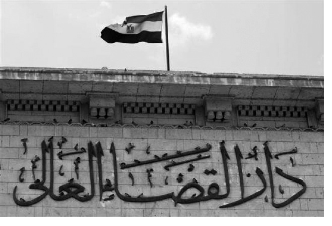
CAIRO — It took one session on Jan. 10 for a court in the Nile Delta province of Beheira to sentence Karim al-Banna, a 21-year-old student, to three years in prison for saying on Facebook that he was an atheist. The student’s lawyer complained that he was denied the right even to present a defense, but an equally chilling aspect of Mr. Banna’s case is that his father testified against him.
Also telling is that Mr. Banna was originally arrested, in November, when he went to the police to complain that his neighbors were harassing him. This was after his name had appeared in a local newspaper on a list of known atheists. Instead of protecting him, the police accused him of insulting Islam.
Such tag teams of family, media and state are not uncommon in cases against atheists. Because atheism itself is not illegal in Egypt, charges are laid under laws against blasphemy or contempt for religion. Similar charges have been used for political purposes against Egypt’s Christian minority.
It is no surprise that Mr. Banna’s conviction occurred on the watch of Abdel Fattah el-Sisi, the former army general who led the ouster of Mohamed Morsi of the Muslim Brotherhood to become president. Regardless of which way the seesaw of power in Egypt tips — toward the Islamists or toward the military — it is always a heterosexual, conservative Muslim man who heads the moral hierarchy. The further from that identity you are, the more vulnerable you are.
Nowhere is this morality power play exercised more vehemently than in curbing perceived religious and sex crimes. Hence Egypt’s witch hunt against gay men. Rights activists say that 2014 was the worst year in a decade for gay people in Egypt, with at least 150 men arrested or put on trial. Same-sex relationships are not illegal, but gay men are targeted under “debauchery” laws.
In a speech this month honoring the Prophet Muhammad’s birthday, Mr. Sisi called on Muslim leaders in Egypt to start a “religious revolution” to counter the jihadist message of the Islamic State. He also sent his foreign minister to the solidarity march after the attacks in Paris at the office of the magazine Charlie Hebdo and a kosher supermarket.
The contradiction in Mr. Sisi’s aim of keeping the heterosexual, conservative Muslim man at the top of Egypt’s moral hierarchy is glaring. You can’t trump the Islamists in their piety and lead a campaign against minorities like atheists and gay men even as you condemn extremist violence and show solidarity for free speech and free thinking.
Despite the clampdown, atheists are openly challenging such hypocrisy. Social media has allowed those who “deviate” from the authoritarian template to find one another and express themselves in ways that the regime, its men of religion and its media otherwise deny them.
(adapted from nytimes.com, January 27th , 2015 )
The syntactic subject of the sentence “Nowhere is this morality power play exercised more vehemently than in curbing perceived religious and sex crimes” is:
The word “nowhere”
The phrase “this morality power play”
The word “morality”
The phrase “this morality power”
The phrase “religious and sex crimes”
Insights de Estudo
Taxa de Acerto
Material de Estudo
Conteúdo Exclusivo
Cadastre-se para ver dicas, estratégias e análise completa desta questão
Criar conta grátis →🎓 AIO + ESPM: Preparação Baseada em Dados
Fizemos o trabalho difícil para você não ter que fazer
Transforme seus estudos com a AIO!
Estudantes como você estão acelerando suas aprovações usando nossa plataforma de AI + aprendizado ativo