
UFSM 2014/1
Brazilian Food - a Mix of Influences
For Sunday Times Extra, 6 July 2014
In a country as geographically expansive as
Brazil, it isn't easy to define the cuisine. Native
Indians and colonisation by the Portuguese,
who brought over African slaves, have all
played their part in the culinary culture. There
is a mix of influences that have endured and
intermingled in Brazil.
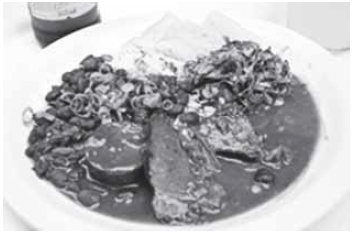
There seems to be an understanding that
feijoada, the black bean stew made with
various pork cuts, with its roots in Africa, is the
national dish. Unctuous and hearty, it's served
with pork crackling, orange slices and collard
greens and enjoyed on Saturdays.
Just as many Asians rely on rice as a staple,
Brazilians look to the starchy tuber cassava
(known as manioc or yuca) – boiled, fried,
stewed, ground into flour and toasted with
butter, as their daily bread.
The South East (São Paulo and Rio fall here)
tends to serve a mix from around the country.
Coxinha (chicken croquettes), tapioca pancakes,
salt cod pasteis (deep-fried pastries)
and pão de queijo (cheese rolls) are popular
city snacks.
Other Brazilian foods to try:
1. The North: Influenced by the Amazon Indians,
the food here is as close to what it was
before colonisation. Try:
• Açaí: A superfruit and Guaraná, a berry
used to make energy drinks.
• Pimenta: spicy peppers.
• Pudim de Tambaqui: A soufflé-like fish
dish with shrimp sauce.
• Tacacá: A soup with salted dry jumbo
prawns and local watercress.
2. The North East: slaves on the sugar cane
plantations used palm oil, coconut milk and
okra, popular in some African countries.
Try:
• Acarajé: A fritter made with beans and
fried in palm oil.
• Bobó de Camarão: Hearty shrimp stew,
made with manioc, coconut milk, and
palm oil.
• Caruru: A stew of okra, dried shrimp and
toasted cashews.
3. South Brazil: A melting pot of cultural
influences from German to Lebanese can be
found here. Try:
• Arroz de Carreteiro: Fried rice with
rehydrated charque – South American
biltong.
• Churrasco: Brazilian braai. Meat
marinated in salt and milk or cachaça –
distilled sugar-cane spirits.
Fonte: Disponível em: http://www.foodandthefabulous.com/recipes/brazilian-food-mix-influences. Acesso em: 15 set. 2014. (adaptado)
O segmento que apresenta o mesmo conteúdo do título em outras palavras e com mais detalhes é
“Native Indians and colonisation by the Portuguese, who brought over African slaves, have all played their part in the culinary culture” (ℓ.2-5).
“feijoada, the black bean stew made with various pork cuts, with its roots in Africa, is the national dish” (ℓ.9-11).
“The South East (São Paulo and Rio fall here) tends to serve a mix from around the country” (ℓ.19-20).
“the food here is as close to what it was before colonisation” (ℓ.27-28).
“slaves on the sugar cane plantations used palm oil, coconut milk and okra, popular in some African countries” (ℓ.36-38).
Insights de Estudo
Taxa de Acerto
Material de Estudo
Conteúdo Exclusivo
Cadastre-se para ver dicas, estratégias e análise completa desta questão
Criar conta grátis →🎓 AIO + UFSM: Preparação Baseada em Dados
Fizemos o trabalho difícil para você não ter que fazer
Transforme seus estudos com a AIO!
Estudantes como você estão acelerando suas aprovações usando nossa plataforma de AI + aprendizado ativo